How to Read a Token's Supply Schedule and Unlock Calendar
In This Article
Introduction
Two coins can have the same price and the same market cap and still be very different investments, because of the tokens you can't see yet. Many crypto projects have large amounts of their supply locked up for teams, early investors and ecosystem funds, released gradually over months or years. When those tokens unlock, the number of coins on the market goes up.
Knowing how to read a token's supply schedule and unlock calendar is one of the most useful skills in crypto research, and it's easier than it sounds. This guide explains the supply numbers you'll see on every price site, how unlocks work, what the research says about their effect on price, and how to check a schedule yourself.
The Four Supply Numbers
Every major price site shows several supply figures. They answer different questions.
- Circulating supply is the number of tokens currently available on the market. It's the basis for market cap. (See circulating supply.)
- Total supply is the number of tokens that exist right now, including ones that are locked. CoinGecko defines it as on-chain supply minus tokens that have been burned.
- Max supply is the most tokens that can ever exist, if the project has a cap at all. Some, like Bitcoin, do. Others don't. (See max supply.)
- Market cap vs. fully diluted valuation (FDV). Market cap is price times circulating supply. FDV is price times the full supply, showing what the project would be worth at today's price if every token were already out. CoinGecko calculates FDV using total supply, while some other sites use max supply, so check which one a site uses before comparing numbers.
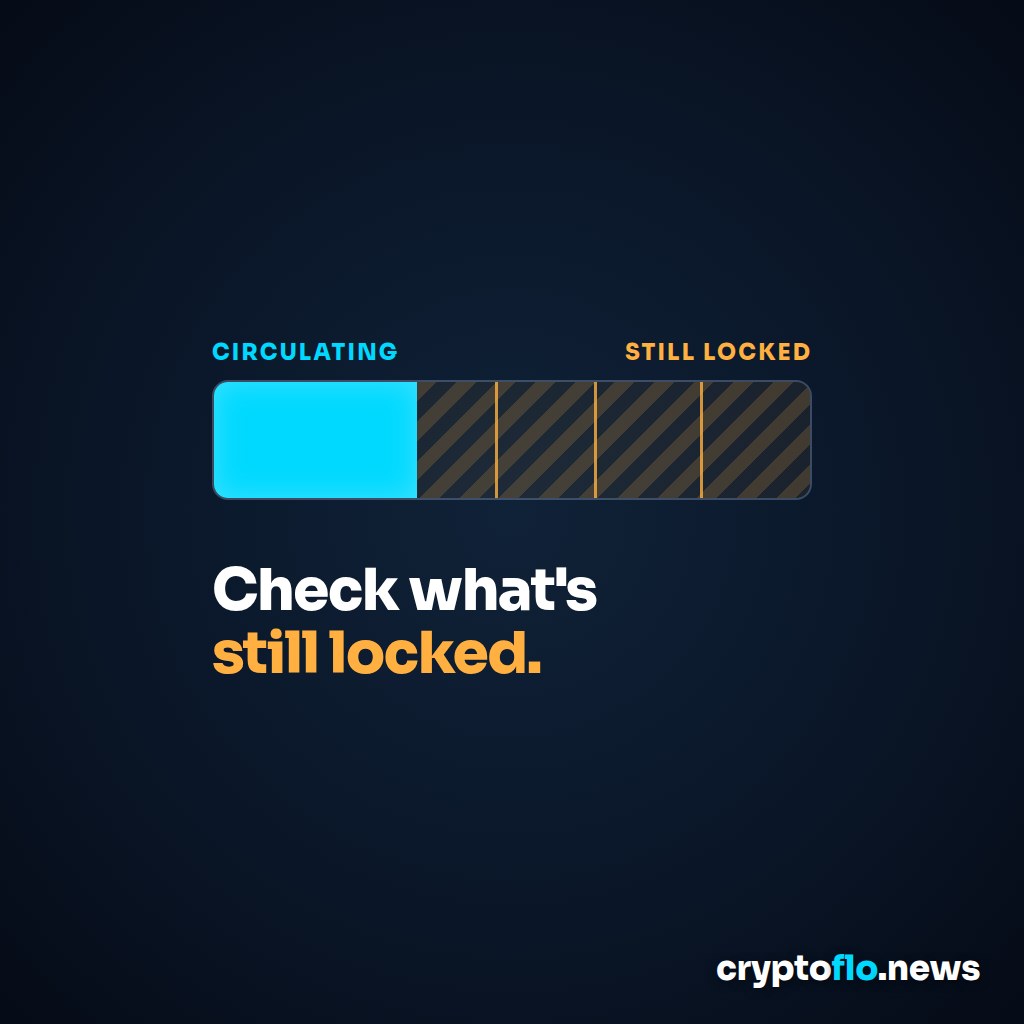
The gap between circulating supply and the full supply tells you how many tokens are still to come. A small gap means most of the supply is already trading. A large one means a lot more could arrive.
How Token Unlocks Work
Tokens that aren't circulating yet are usually locked under a vesting schedule: a set of rules for when they're released, and to whom.
- Cliff unlocks release a large amount at once, often after a waiting period. A team's tokens might stay fully locked for a year, then release a big chunk on one date.
- Linear unlocks release tokens gradually, for example a fixed amount every day or month, over a set period.
Who receives the tokens matters too. Common groups include the founding team, early investors, ecosystem and community funds, foundations, and staking or mining rewards.
One familiar example is XRP. In 2017, Ripple placed 55 billion XRP into escrow, with up to 1 billion released each month, and any unused XRP returned to new escrow. It's a predictable, published schedule, which is exactly what you want to see. (Our XRP sources guide covers where to follow it.)
Do Unlocks Move Prices?
Often, yes, though not in a simple way. An analysis of more than 16,000 token unlock events by the market maker Keyrock found that about 90% were associated with downward price pressure. It also found that the effect often started in the weeks before the unlock, as traders positioned ahead of it, and that unlocks to team members tended to weigh on prices more than unlocks to ecosystem funds.
That doesn't mean every unlock is bad news, or that you should trade around them. It means unlocks are a real force on supply that's worth knowing about, especially for newer tokens with a lot still locked. (Our guide to what crypto news actually moves prices puts this alongside other factors.)
How to Check a Token's Supply Schedule
1. Start with a price site. CoinGecko and CoinMarketCap show circulating, total and max supply, plus market cap and FDV. A big gap between market cap and FDV is your first clue.
2. Read the project's own tokenomics. Most projects publish their allocation and vesting schedule in their documentation, whitepaper or blog. This is the primary source.
3. Check an unlock tracker. Tokenomist, formerly known as TokenUnlocks, tracks vesting and unlock schedules across many projects, with calendars of upcoming cliff and linear unlocks.
4. Verify on-chain when it matters. For big claims, a block explorer can show whether tokens actually moved from vesting or treasury wallets.
5. Note who's unlocking. A team or investor unlock is different from tokens flowing to a community or ecosystem fund.
Headlines to Read Carefully
- "Massive unlock incoming!" Check the size relative to the circulating supply, not just the dollar amount. A big number can be a small percentage.
- "Unlock means a crash." Unlocked tokens aren't automatically sold. Some are staked, held or used. The research shows pressure on average, not a guaranteed drop.
- "Low market cap, huge upside." A small market cap can hide a much larger FDV. Always check how much supply is still locked.
- "Fixed supply" claims. Some tokens have a hard cap. Others have ongoing issuance, burns, or both. Check the project's documentation. (Our guide to tokenomics explains the basics.)
Where Crypto Flo Fits
Supply changes and unlocks are exactly the kind of detail that's easy to miss in daily news. Crypto Flo is a personalized AI crypto intelligence platform that turns the coins you follow and the sources you choose into a daily audio or text briefing, built from a vetted library of news outlets and YouTube channels. See how Crypto Flo works, and our guide to choosing crypto news sources you can trust.
Frequently Asked Questions
Q: What is a token unlock?
A: A token unlock is when tokens that were locked under a vesting schedule are released and can be traded. Unlocks can happen all at once (a cliff unlock) or gradually over time (a linear unlock).
Q: What's the difference between circulating supply and total supply?
A: Circulating supply is the number of tokens currently available on the market. Total supply includes tokens that exist but are locked, such as team or investor allocations. CoinGecko defines total supply as on-chain supply minus burned tokens.
Q: What is fully diluted valuation (FDV)?
A: FDV is a token's price multiplied by its full supply, showing what the project would be worth if every token were already circulating. CoinGecko uses total supply for FDV, while some other sites use max supply.
Q: Do token unlocks cause prices to drop?
A: Often, but not always. An analysis of more than 16,000 unlock events by the market maker Keyrock found that about 90% were associated with downward price pressure, often starting before the unlock date. Unlocked tokens aren't automatically sold, though.
Q: Where can I see upcoming token unlocks?
A: Unlock trackers such as Tokenomist, formerly known as TokenUnlocks, publish calendars of upcoming unlocks. The project's own tokenomics documentation is the primary source for its vesting schedule.
Q: What should I look for in a supply schedule?
A: Look at how much supply is still locked, when it unlocks, whether unlocks are cliff or linear, and who receives the tokens. A large gap between market cap and fully diluted valuation means a lot of supply is still to come.
The Bottom Line
A token's price only tells you part of the story. Check the gap between circulating supply and the full supply, read the project's own vesting schedule, use an unlock tracker to see what's coming, and pay attention to who receives the tokens. Unlocks are a real force on supply, but size and context matter more than headlines. Read the schedule, and you'll understand a token better than most of the timeline.
This content was created with AI assistance and may contain errors, always verify before acting. Not financial advice. Always do your own research before making any investment decisions.
Frequently Asked Questions
What is a token unlock?
A token unlock is when tokens that were locked under a vesting schedule are released and can be traded. Unlocks can happen all at once (a cliff unlock) or gradually over time (a linear unlock).
What's the difference between circulating supply and total supply?
Circulating supply is the number of tokens currently available on the market. Total supply includes tokens that exist but are locked, such as team or investor allocations. CoinGecko defines total supply as on-chain supply minus burned tokens.
What is fully diluted valuation (FDV)?
FDV is a token's price multiplied by its full supply, showing what the project would be worth if every token were already circulating. CoinGecko uses total supply for FDV, while some other sites use max supply.
Do token unlocks cause prices to drop?
Often, but not always. An analysis of more than 16,000 unlock events by the market maker Keyrock found that about 90% were associated with downward price pressure, often starting before the unlock date. Unlocked tokens aren't automatically sold, though.
Where can I see upcoming token unlocks?
Unlock trackers such as Tokenomist, formerly known as TokenUnlocks, publish calendars of upcoming unlocks. The project's own tokenomics documentation is the primary source for its vesting schedule.
What should I look for in a supply schedule?
Look at how much supply is still locked, when it unlocks, whether unlocks are cliff or linear, and who receives the tokens. A large gap between market cap and fully diluted valuation means a lot of supply is still to come.
Let AI summarize these channels for you daily
Pick your favorite crypto YouTube channels and news sites. Get a 5-minute AI brief every morning.
Choose Your Sources