Crypto ETF Flows Explained: What They Tell You, and What They Don't
In This Article
Introduction
"Bitcoin ETFs saw hundreds of millions in inflows yesterday." Headlines like that show up almost every day, and they're often written as if they explain where the price is heading next. Sometimes flows tell you something real about demand. Sometimes they mostly reflect hedge fund trades that have nothing to do with a view on price.
This guide explains how crypto ETFs work, where the daily flow numbers come from, what they can actually tell you, and the mistakes people make when reading them.
How a Spot Crypto ETF Works
A spot ETF holds the actual coin. When you buy a share of a spot bitcoin ETF through a brokerage account, the fund holds bitcoin with a custodian on your behalf. You get price exposure without managing a wallet or a private key. (Our ETF glossary entry covers the basic structure.)
A short history of the US market:
- January 10, 2024: the SEC approved 11 spot bitcoin ETFs, and trading began the next day. The SEC chair at the time said the agency approved the products, not bitcoin itself.
- July 23, 2024: spot ether ETFs began trading.
- July 29, 2025: the SEC approved in-kind creations and redemptions for bitcoin and ether ETFs. Before that, these funds had to use cash.
- September 17, 2025: the SEC approved generic listing standards, so exchanges could list qualifying crypto ETFs without a separate rule approval for each one.
- Late 2025: spot ETFs for other coins followed, including the Bitwise Solana Staking ETF on October 28, 2025, and Canary Capital's XRP ETF on November 13, 2025.
Where Flows Come From
ETF shares aren't created out of thin air when you click "buy." Large institutions called authorized participants create new shares by delivering cash or coins to the fund, and they redeem shares by handing them back.
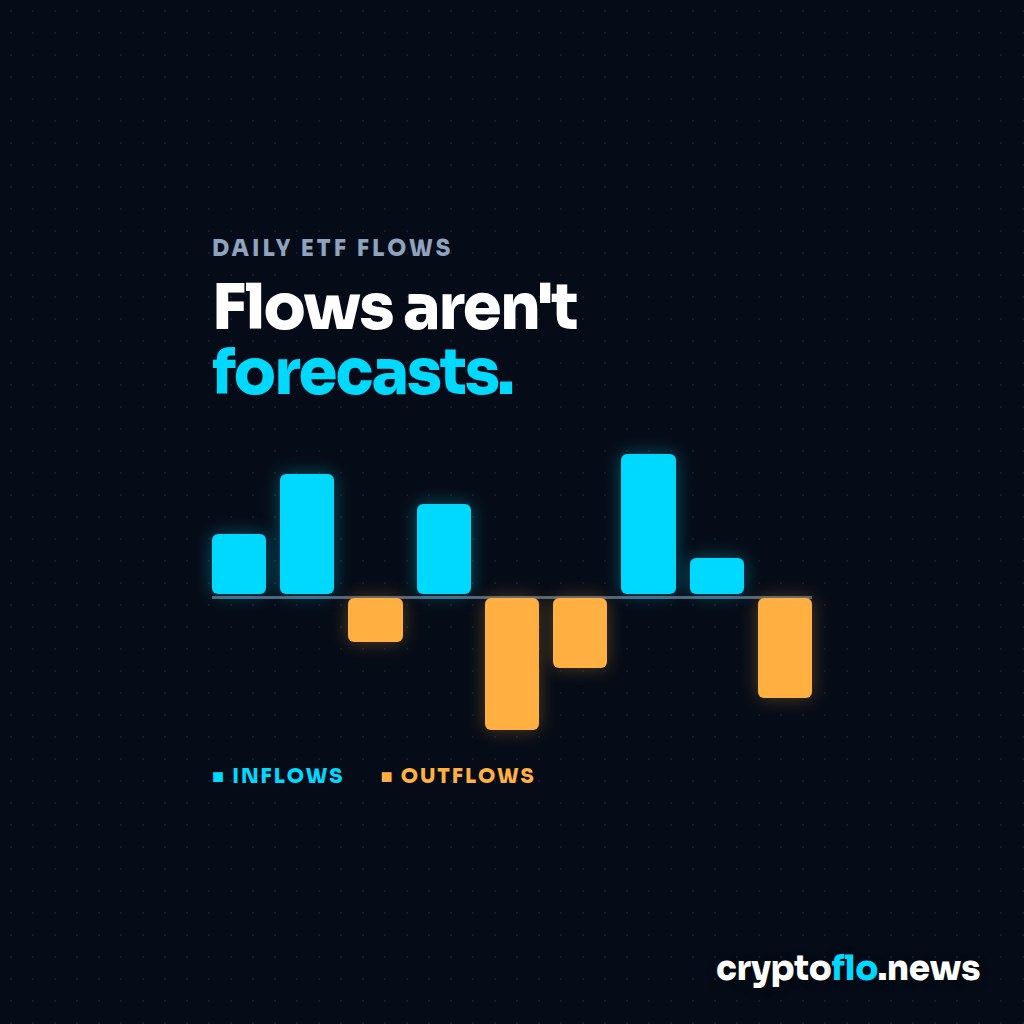
- Inflows mean new shares were created, so the fund took in more cash or coins.
- Outflows mean shares were redeemed, so the fund released cash or coins.
- Net flow is the difference for the day.
Most of the daily numbers you see are compiled by trackers such as Farside Investors from issuer websites and financial data providers. They're published after the US market closes, so they're always at least a day behind live trading. Early figures can change once every issuer has reported, and Farside's own table notes that its data may contain errors. Treat a single day's number as provisional.
What ETF Flows Can Tell You
- Long-term demand from regular investors and advisers. Weeks and months of steady inflows suggest that money is moving into crypto through traditional brokerage accounts.
- Which funds people prefer. Flows show where money is going between issuers, which reflects fees, brand and distribution.
- Changes in sentiment over time. A long run of inflows turning into a run of outflows is worth noticing, especially alongside other data.
What ETF Flows Don't Tell You
They aren't all bets on price. A popular hedge fund strategy, the basis trade, buys ETF shares and sells futures at the same time to capture the gap between the two prices. The trade is designed to profit whichever way the price moves. A 2024 Bloomberg report noted that the basis trade's popularity makes short-term flow data a less clean indicator of investor interest, and analysts have linked some large outflow days to basis trades being unwound rather than to investors turning bearish.
They don't predict the next day's price. Flows are reported after the market closes and describe what already happened. A big inflow day can follow a price rise rather than cause the next one.
A launch isn't a rally. When the first US spot XRP ETF debuted on November 13, 2025, it drew about $58 million in first-day trading volume, one of the strongest launches of the year. XRP's price still fell that day, alongside a broader market drop. Strong ETF demand and the price can move in different directions.
Dollar figures need context. A few hundred million dollars sounds huge, but the largest funds hold many billions, so it can be a small share of the total. Compare a day's flow to the fund's total assets and to the coin's normal trading volume.
How to Read Flow Headlines Well
1. Look at the trend, not the day. A week or a month of flows says more than any single print.
2. Check whether the number is final. Early totals often change after the last issuer reports.
3. Look at the price at the same time. Flows that rise while the price falls, or the other way around, are often the more interesting story.
4. Ask who might be behind it. Large moves around futures expiry or changes in the futures premium may be hedge fund positioning rather than new long-term buyers.
5. Pair it with other data. Flows are one input. On-chain data, futures data and actual news give you the rest. (See our guide to on-chain metrics.)
Good analysts who track ETF flows usually do exactly this. They put the number in context, explain what's driving it, and say when the data is noisy. That's the reasoning worth following. (Our guide to what crypto news actually moves prices covers where flows fit among the other drivers.)
Where Crypto Flo Fits
ETF flow numbers land every day, and most of them come without the context needed to read them. Crypto Flo is a personalized AI crypto intelligence platform that turns the coins you follow and the sources you choose into a daily audio or text briefing, built from a vetted library of news outlets and analyst YouTube channels for each coin. See how Crypto Flo works, and our guide to choosing crypto news sources you can trust.
Frequently Asked Questions
Q: What are crypto ETF flows?
A: ETF flows measure money moving into or out of an exchange-traded fund. Inflows mean new shares were created and the fund took in cash or coins. Outflows mean shares were redeemed. Net flow is the difference for the day.
Q: Do ETF inflows make the price go up?
A: Not reliably. Inflows can reflect real demand, but they're reported after the market closes and describe what already happened. Some flows also come from hedge fund basis trades that are designed to profit whichever way the price moves.
Q: What is the bitcoin ETF basis trade?
A: The basis trade buys spot ETF shares and sells futures at the same time to capture the difference between the two prices. Because it isn't a bet on direction, flows driven by it don't say much about whether investors are bullish or bearish.
Q: When were spot bitcoin ETFs approved in the US?
A: The SEC approved 11 spot bitcoin ETFs on January 10, 2024, and trading began the next day. Spot ether ETFs followed on July 23, 2024.
Q: Where does daily ETF flow data come from?
A: Trackers such as Farside Investors compile it from issuer websites and financial data providers. It's published after the US market closes, and early figures can be revised once every issuer has reported.
Q: How should I use ETF flow data?
A: Look at trends over weeks rather than single days, check whether the numbers are final, compare flows to the fund's size and the price action, and pair them with on-chain data, futures data and the news.
The Bottom Line
Crypto ETF flows are a useful window into how traditional money is moving into crypto, but a single day's number is a noisy, provisional, after-the-fact figure. Some of it is long-term demand, and some of it is hedge funds trading the gap between spot and futures. Read flows as a trend, in context, alongside the price and other data, and you'll get far more out of them than the headline does.
This content was created with AI assistance and may contain errors, always verify before acting. Not financial advice. Always do your own research before making any investment decisions.
Frequently Asked Questions
What are crypto ETF flows?
ETF flows measure money moving into or out of an exchange-traded fund. Inflows mean new shares were created and the fund took in cash or coins. Outflows mean shares were redeemed. Net flow is the difference for the day.
Do ETF inflows make the price go up?
Not reliably. Inflows can reflect real demand, but they're reported after the market closes and describe what already happened. Some flows also come from hedge fund basis trades that are designed to profit whichever way the price moves.
What is the bitcoin ETF basis trade?
The basis trade buys spot ETF shares and sells futures at the same time to capture the difference between the two prices. Because it isn't a bet on direction, flows driven by it don't say much about whether investors are bullish or bearish.
When were spot bitcoin ETFs approved in the US?
The SEC approved 11 spot bitcoin ETFs on January 10, 2024, and trading began the next day. Spot ether ETFs followed on July 23, 2024.
Where does daily ETF flow data come from?
Trackers such as Farside Investors compile it from issuer websites and financial data providers. It's published after the US market closes, and early figures can be revised once every issuer has reported.
How should I use ETF flow data?
Look at trends over weeks rather than single days, check whether the numbers are final, compare flows to the fund's size and the price action, and pair them with on-chain data, futures data and the news.
Let AI summarize these channels for you daily
Pick your favorite crypto YouTube channels and news sites. Get a 5-minute AI brief every morning.
Choose Your Sources