How to Spot Fake Crypto News Before It Costs You
In This Article
Introduction
Fake crypto news works because crypto moves fast and rewards whoever acts first. A convincing rumor can move a price within minutes, and by the time it's corrected, the people who spread it have often already sold.
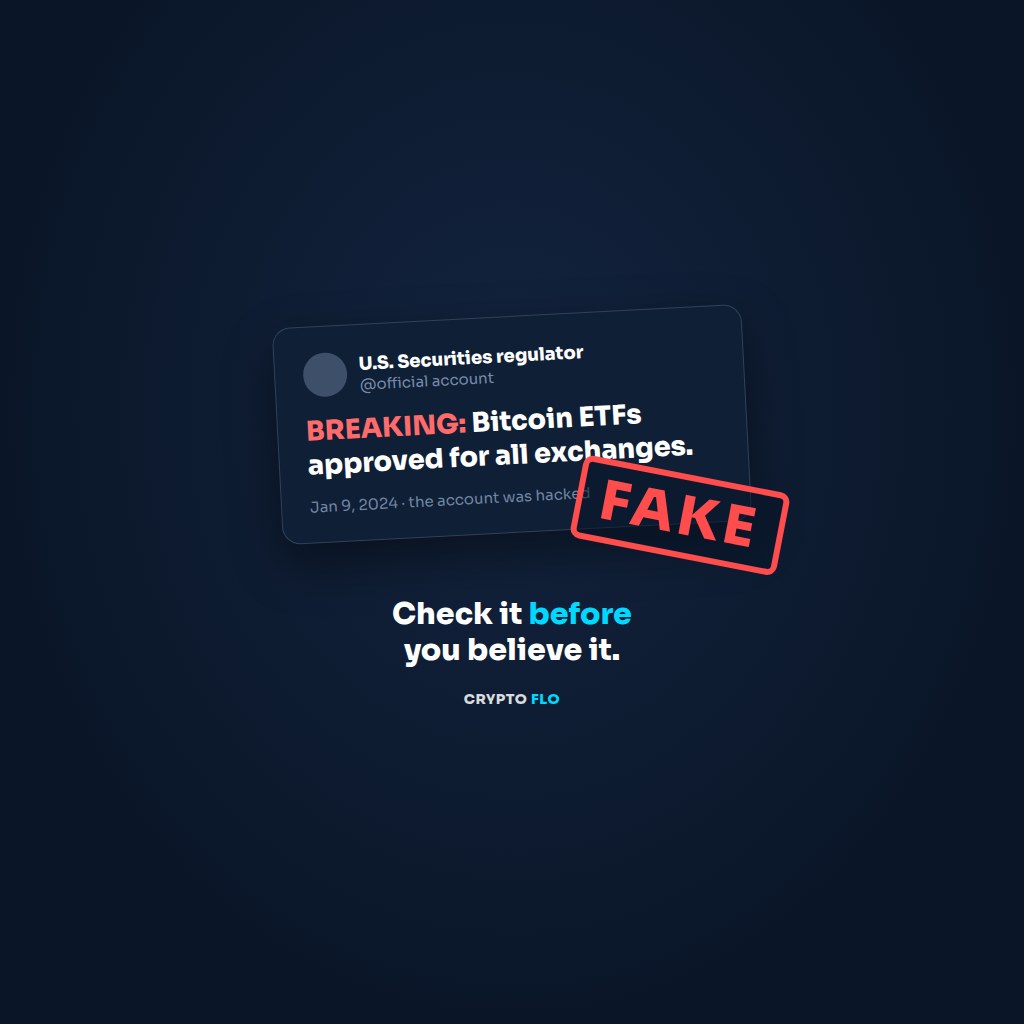
The best-known example: on January 9, 2024, the US SEC's own X account posted that spot Bitcoin ETFs had been approved. They hadn't. The account had been compromised. Bitcoin jumped, then fell when the SEC said the post was unauthorized. The real approval came the next day. If a regulator's own account can post fake news, "I saw it on X" is never enough.
Here's how to recognize the common kinds of fake crypto news, and a five-step check you can run in a couple of minutes before you believe, share or act on anything.
The Six Most Common Kinds of Fake Crypto News
1. Hacked or impersonated official accounts
A real account that's been taken over, like the SEC's, or a lookalike with a nearly identical name and profile picture. These are dangerous because they look exactly like the source you'd trust.
2. Fake or exaggerated partnerships
"Company X partners with [famous bank]" is one of crypto's most common headlines, and one of the most often wrong. Sometimes the bank has a small relationship with a third party. Sometimes there's no relationship at all. We saw this with HBAR in September 2026: posts claimed BlackRock was tokenizing its fund on Hedera, but a different company had done it, and BlackRock had said it has no relationship with Hedera. (See why HBAR is up.)
3. True facts with a misleading headline
The trickiest kind, because nothing in it is technically false. A real event is framed to suggest something much bigger. BlackRock's name appeared on a set of new tokenized portfolios in 2026, for example, but BlackRock wasn't the one running them.
4. Screenshots and "leaks"
A screenshot of a document, a message or a news article is trivially easy to fake. If the only evidence is an image with no link to where it came from, treat it as unconfirmed.
5. Deepfake videos and fake giveaways
AI-generated videos of well-known figures promoting a coin or a "send 1, get 2 back" giveaway are common on YouTube and X. No real public figure gives away crypto this way. It's a scam every time. (Our crypto scams guide covers the patterns.)
6. AI-written news sites
Some sites publish large volumes of AI-generated crypto "news" to rank in search results, often mixing real events with invented details or quotes. Signs include no named authors, no links to original sources, and articles that repeat themselves.
The Five-Step Check
Run this before you believe, share or act on any crypto story:
1. Go to the official source. If a project, company or regulator supposedly announced something, check its own website or verified account. Real announcements appear there. If you can't find it there, assume it isn't true yet.
2. Look for two independent reporters. Not two accounts reposting the same tweet. Two separate outlets that each confirmed it. One source is a rumor; two independent ones is news.
3. Check the date. Old stories get recirculated as if they were new, especially during big market moves.
4. Check the account or web address. Lookalike handles and domains swap a single character. Compare it letter by letter with the real one.
5. Wait before you act. Real news will still be real in 30 minutes. Fake news often won't. The urgency is usually the point.
Red Flags That Should Make You Stop
- A claim you can't find on the project's official channels
- "Breaking" news from an account you've never seen before
- Pressure to act immediately, or a countdown
- A screenshot with no link to where it came from
- A giveaway that asks you to send crypto first
- A single source, however large its following
- Anyone dismissing all doubt as FUD
Why Trusted Sources Are Your Best Defense
You can't fact-check everything, and you shouldn't have to. The practical defense is deciding in advance which sources you trust, the ones that link to original records, disclose their incentives, and correct their mistakes, and treating everything else as unconfirmed until one of them reports it. Our guide to choosing crypto news sources you can trust walks through six tests for picking them.
Where Crypto Flo Fits
Crypto Flo is a personalized AI crypto intelligence platform that turns the coins you follow and the sources you choose into a daily audio or text briefing. Two parts of how it works help with misinformation: you choose your sources from a vetted library rather than from the open web, and the AI writes each brief from what those sources published instead of from general knowledge or social media chatter. It isn't a fact-checker, and no summary is, so the five-step check still applies to anything you plan to act on. See how Crypto Flo works.
Frequently Asked Questions
Q: How can I tell if crypto news is fake?
A: Check the project's or company's official channels, look for two independent reporters confirming it, check the date and the exact account or web address, and wait before acting. If you can't confirm it at the official source, treat it as unconfirmed.
Q: What was the fake SEC Bitcoin ETF announcement?
A: On January 9, 2024, the SEC's X account posted that spot Bitcoin ETFs had been approved. The account had been compromised and the post was false. Bitcoin's price jumped and then fell once the SEC said the post was unauthorized. The actual approval came the following day.
Q: Are crypto giveaways from celebrities real?
A: No. Giveaways that ask you to send crypto to receive more back are scams, often using deepfake videos or impersonated accounts. No real public figure distributes crypto this way.
Q: Why does fake news spread so fast in crypto?
A: Crypto trades 24/7 and prices react within minutes, so there's money to be made by whoever acts first on a rumor. That rewards speed over accuracy, and bad actors exploit it.
Q: Can I trust crypto news on X (Twitter)?
A: Official project and company accounts are useful, and news often breaks there first. But impersonation, hacked accounts and rumors spread there too, so confirm anything important through the official source and independent reporting before acting.
Q: What is a misleading crypto headline?
A: A headline that reports something true but frames it to suggest something bigger, such as naming a famous company when its actual role is small or indirect. Reading the original announcement usually shows what really happened.
The Bottom Line
Fake crypto news isn't going away, because it pays. But most of it fails a simple check: find the claim at its official source, look for two independent confirmations, check the date and the exact account, and give it 30 minutes before you act. Pair that habit with a short list of sources you trust, and the rumors lose most of their power over you.
This content was created with AI assistance and may contain errors, always verify before acting. Not financial advice. Always do your own research before making any investment decisions.
Frequently Asked Questions
How can I tell if crypto news is fake?
Check the project's or company's official channels, look for two independent reporters confirming it, check the date and the exact account or web address, and wait before acting. If you can't confirm it at the official source, treat it as unconfirmed.
What was the fake SEC Bitcoin ETF announcement?
On January 9, 2024, the SEC's X account posted that spot Bitcoin ETFs had been approved. The account had been compromised and the post was false. Bitcoin's price jumped and then fell once the SEC said the post was unauthorized. The actual approval came the following day.
Are crypto giveaways from celebrities real?
No. Giveaways that ask you to send crypto to receive more back are scams, often using deepfake videos or impersonated accounts. No real public figure distributes crypto this way.
Why does fake news spread so fast in crypto?
Crypto trades 24/7 and prices react within minutes, so there's money to be made by whoever acts first on a rumor. That rewards speed over accuracy, and bad actors exploit it.
Can I trust crypto news on X (Twitter)?
Official project and company accounts are useful, and news often breaks there first. But impersonation, hacked accounts and rumors spread there too, so confirm anything important through the official source and independent reporting before acting.
What is a misleading crypto headline?
A headline that reports something true but frames it to suggest something bigger, such as naming a famous company when its actual role is small or indirect. Reading the original announcement usually shows what really happened.
Let AI summarize these channels for you daily
Pick your favorite crypto YouTube channels and news sites. Get a 5-minute AI brief every morning.
Choose Your Sources