The Best Sources for Polkadot News, and How to Use Them
In This Article
Introduction
Polkadot is one of crypto's most technically ambitious networks, and one of the most self-governed. Its token holders vote on almost everything: upgrades, spending, even the supply of DOT itself. That makes Polkadot news unusual. A lot of it is about proposals, votes and treasury spending, and the difference between something being proposed and something being decided is where most of the confusion starts.
This guide covers what actually moves Polkadot news, the sources worth following (all verified active as of October 2026), the misinformation that keeps coming back, and a short list you can check in a few minutes a day.
Who's Who on Polkadot
- DOT is the native token of the Polkadot network. It's used for staking, fees and voting in governance.
- Polkadot Hub is the chain where most everyday activity now happens: balances, transfers, staking and governance. It was created when Polkadot moved its user-facing functions from the original relay chain to Asset Hub, a migration completed on November 4, 2025.
- OpenGov is Polkadot's on-chain governance system, often called the Polkadot DAO. DOT holders vote on referenda, and passed referenda are carried out by the network itself.
- The Web3 Foundation supports Polkadot's research and development, and Parity Technologies has built much of its core software. Gavin Wood, a co-founder of Ethereum, co-founded Polkadot.
- Kusama is Polkadot's experimental "canary" network, with its own token, KSM. Kusama news isn't Polkadot news, though changes often appear there first.
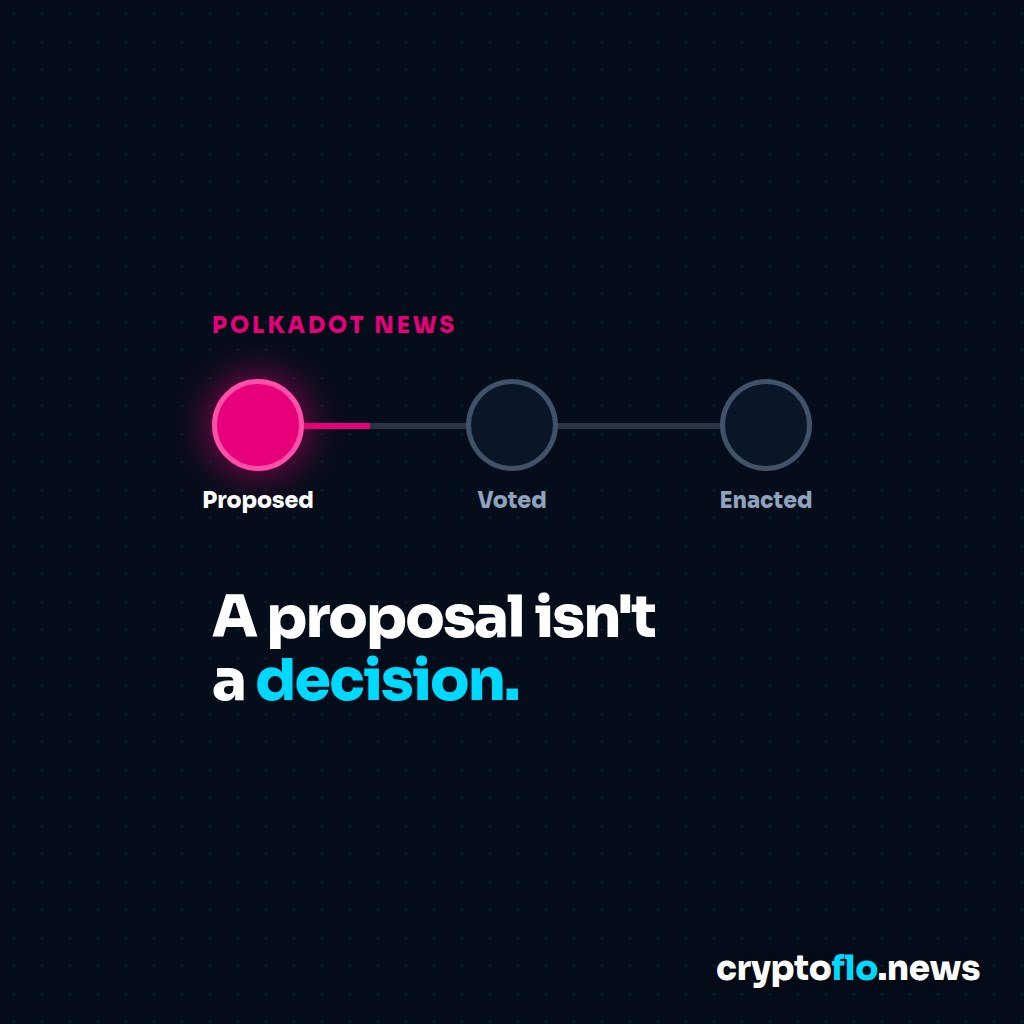
Proposed Isn't the Same as Passed
This is the single most useful thing to know when reading Polkadot news. Anyone can submit a referendum, and many headlines are written the moment one is filed. But a proposal still has to gather support, pass a vote and then be carried out. Plenty never get that far.
So when you read "Polkadot to…" or "Polkadot DAO plans…", check the referendum's status first. Is it in preparation, being voted on, approved, or already enacted? The governance sites listed below show this for every referendum, along with who voted and how. (Our guide to reading crypto project announcements covers the same habit more broadly.)
What Actually Moves Polkadot News
- Tokenomics votes. In September 2025, DOT holders approved a hard cap of 2.1 billion DOT, replacing Polkadot's old model of unlimited issuance. The first issuance cut took effect on March 14, 2026, reducing new DOT by more than half, with further step-downs planned every two years. Headlines about "the Polkadot halving" refer to these changes. (See max supply for why a cap matters.)
- The dotUSD stablecoin. Polkadot's own stablecoin, dotUSD, went live on October 8, 2026, after DOT holders approved it in a referendum. In its first phase it's minted 1:1 against USDT, Tether's stablecoin, with a version backed by DOT planned later.
- ETF news. The 21Shares Polkadot ETF (TDOT), the first US spot ETF for DOT, began trading on Nasdaq on March 6, 2026. Fund news, flows and any new filings are a recurring headline.
- Treasury spending. Polkadot has a large on-chain treasury, and proposals to fund teams, marketing or events are common news, and sometimes controversial. The amounts and votes are all public.
- Upgrades. Polkadot Hub, smart contract support and runtime upgrades are frequent technical news. Check whether a feature is live on mainnet, on a test network, or still in development.
The Best Sources for Polkadot News
Official sources
- Polkadot blog: official announcements and ecosystem updates.
- Polkadot Forum: where proposals are discussed before and during votes, and where technical teams post updates. It's often the first place real news appears.
- Polkadot Docs and the Polkadot Wiki: how things actually work, including staking, governance and upgrades. The wiki also lists Polkadot's official domains, which helps you spot fake sites.
- Web3 Foundation's news page and the official Polkadot YouTube channel: research, grants, events and explainers from the project itself.
Data sources: check the claims yourself
- Subsquare and Polkassembly: the two main governance sites. Every referendum, its status, the votes cast and the discussion around it. This is the place to check any "Polkadot DAO approves…" headline.
- Subscan: Polkadot's main block explorer. Use it to check transfers, staking, treasury payouts and big wallet moves.
Analysts, community media and YouTube creators
Polkadot's governance-heavy news makes good analysts especially valuable. They explain what a referendum would actually change, put treasury spending and tokenomics votes in context, follow the technical roadmap, and walk through the price picture. Community media is part of this too: The Kusamarian, for example, has long covered Polkadot governance and builders through interviews and livestreams, with funding approved by the Polkadot treasury. The best analysts show their data and reasoning, separate news from their own view, and disclose sponsorships and funding. Pick a few who do that consistently, and pair them with the official and data sources above.
Reporters: established newsrooms
- The Block and Cointelegraph cover Polkadot regularly, including governance votes, ETF news and upgrades.
Polkadot Misinformation to Watch For
- Proposals reported as decisions. The most common Polkadot error. Check the referendum's status on Subsquare or Polkassembly before treating anything as settled.
- "DOT used to be worth hundreds of dollars." On August 21, 2020, Polkadot redenominated DOT: each old DOT became 100 new DOT, so balances rose 100x and the price per token fell by the same amount. No value was lost. Old charts and posts that quote pre-2020 prices aren't comparing like with like.
- Fake giveaways. "Send DOT and get double back" is always a scam. The Polkadot Wiki warns about fake giveaways that wrap official videos in "giveaway" text, and about sites that ask for your seed phrase to "sync" or unlock a wallet. (More in how to spot fake crypto news.)
- Fake Polkadot sites. Phishing sites copy Polkadot's wallets and governance tools. Check any link against the official domains listed in the Polkadot Wiki before connecting a wallet.
- Kusama news passed off as Polkadot news. Kusama runs ahead of Polkadot, and a change there isn't automatically coming to Polkadot.
- Targets with no reasoning. A price target is an analyst's view, not news. From someone who shows their data and reasoning, it's worth weighing. A big round number with no case behind it isn't analysis.
A Simple Polkadot Source List
You don't need all of these. A lean list might be:
1. The Polkadot blog, for official announcements
2. The Polkadot Forum, for proposals and updates as they happen
3. Subsquare or Polkassembly, to check what's proposed, passed or enacted
4. Subscan, to check transfers, staking and treasury payouts
5. One newsroom, such as The Block or Cointelegraph, for daily news
6. One or two analysts you trust, for context and the bigger picture
Our 15-minute routine shows how to fit a list like this into your day, and our guide to choosing crypto news sources you can trust explains the thinking behind it.
Where Crypto Flo Fits
Polkadot is one of the 15 coins Crypto Flo supports. Crypto Flo is a personalized AI crypto intelligence platform that turns the coins you follow and the sources you choose into a daily audio or text briefing. For each coin it maintains a vetted library of at least 10 YouTube channels and 10 news outlets, and you choose which of them brief you. The sources above are our editorial picks for this guide. Crypto Flo's own library is separate, and you choose from it inside the app. See how Crypto Flo works.
Frequently Asked Questions
Q: What is the best source for Polkadot news?
A: There isn't one. A good mix is the Polkadot blog and Forum for official news, Subsquare or Polkassembly to check governance votes, Subscan to check on-chain activity, one established newsroom such as The Block or Cointelegraph, and one or two analysts who show their reasoning.
Q: Does DOT have a maximum supply?
A: Yes, since a 2025 governance vote. DOT holders approved a hard cap of 2.1 billion DOT in September 2025, and the first cut to new issuance took effect on March 14, 2026, with further reductions every two years.
Q: How do I check if a Polkadot proposal actually passed?
A: Look up the referendum on Subsquare or Polkassembly. Each one shows its current status, such as preparing, deciding, approved or enacted, along with the votes cast. A filed proposal isn't a decision.
Q: Is there a Polkadot ETF?
A: Yes. The 21Shares Polkadot ETF, ticker TDOT, became the first US spot Polkadot ETF when it began trading on Nasdaq on March 6, 2026.
Q: Why do old charts show DOT at hundreds of dollars?
A: Because of the 2020 redenomination. On August 21, 2020, each old DOT became 100 new DOT, so the price per token fell 100x while holders' total value stayed the same.
Q: What is dotUSD?
A: dotUSD is Polkadot's native stablecoin, launched on October 8, 2026, after a governance vote. In its first phase it's minted 1:1 against USDT, with a DOT-backed version planned later.
The Bottom Line
Polkadot news is shaped by its governance: token holders propose, debate and vote in public, and almost every claim can be checked. Use the Polkadot blog and Forum for official news, Subsquare, Polkassembly and Subscan to see what's really been decided and what's happening on-chain, a good newsroom for daily coverage, and a couple of trusted analysts for context. Remember that a proposal isn't a decision and that pre-2020 DOT prices aren't comparable, and you'll read Polkadot news better than most of the timeline.
This content was created with AI assistance and may contain errors, always verify before acting. Not financial advice. Always do your own research before making any investment decisions.
Frequently Asked Questions
What is the best source for Polkadot news?
There isn't one. A good mix is the Polkadot blog and Forum for official news, Subsquare or Polkassembly to check governance votes, Subscan to check on-chain activity, one established newsroom such as The Block or Cointelegraph, and one or two analysts who show their reasoning.
Does DOT have a maximum supply?
Yes, since a 2025 governance vote. DOT holders approved a hard cap of 2.1 billion DOT in September 2025, and the first cut to new issuance took effect on March 14, 2026, with further reductions every two years.
How do I check if a Polkadot proposal actually passed?
Look up the referendum on Subsquare or Polkassembly. Each one shows its current status, such as preparing, deciding, approved or enacted, along with the votes cast. A filed proposal isn't a decision.
Is there a Polkadot ETF?
Yes. The 21Shares Polkadot ETF, ticker TDOT, became the first US spot Polkadot ETF when it began trading on Nasdaq on March 6, 2026.
Why do old charts show DOT at hundreds of dollars?
Because of the 2020 redenomination. On August 21, 2020, each old DOT became 100 new DOT, so the price per token fell 100x while holders' total value stayed the same.
What is dotUSD?
dotUSD is Polkadot's native stablecoin, launched on October 8, 2026, after a governance vote. In its first phase it's minted 1:1 against USDT, with a DOT-backed version planned later.
Let AI summarize these channels for you daily
Pick your favorite crypto YouTube channels and news sites. Get a 5-minute AI brief every morning.
Choose Your Sources