The Best Sources for Dogecoin News, and How to Use Them
In This Article
Introduction
Dogecoin started as a joke in 2013 and became one of the most widely held cryptocurrencies in the world. That history shapes its news. Dogecoin has no company behind it, a small volunteer development team, and a community that moves fast. It's also unusually sensitive to celebrity posts, and it shares a name with a US government office that has nothing to do with it.
That mix makes Dogecoin news easy to find and easy to misread. This guide covers what actually moves Dogecoin news, the sources worth following (all verified active as of October 2026), the misinformation that keeps coming back, and a short list you can check in a few minutes a day.
Who's Who on Dogecoin
- DOGE is the native token of the Dogecoin network, a proof-of-work blockchain originally based on Litecoin's code.
- The Dogecoin Foundation is a non-profit that supports the project and its community.
- House of Doge is the Foundation's commercial arm. It works on business deals, payments and treasury partnerships, and announced plans to become a public company through a merger with Brag House Holdings.
- Dogecoin Core is the main software that runs the network, maintained by a small team of mostly volunteer developers on GitHub.
Knowing this matters when you read the news. A Foundation post, a House of Doge business deal and a Dogecoin Core release are very different kinds of events.
Dogecoin Has No Supply Cap
Unlike Bitcoin, Dogecoin has no maximum supply. Miners receive 10,000 new DOGE for each block, and a block is produced roughly every minute, which adds about 5 billion DOGE a year. Because that number is fixed while the total supply keeps growing, the yearly inflation rate slowly falls over time, but it never reaches zero. This is often left out of hype about Dogecoin "running out" or becoming scarce, so it's worth knowing before you read any supply claim.
What Actually Moves Dogecoin News
- Celebrity and social posts. Posts by Elon Musk and other high-profile figures have moved Dogecoin's price many times. These moves are often fast and short-lived, which is why it's worth checking what was actually said, and where.
- ETF news. Several US funds offer Dogecoin exposure. REX-Osprey's DOJE, which uses derivatives through a subsidiary, debuted on September 18, 2025. Grayscale's GDOG, the first spot Dogecoin ETF, began trading on NYSE Arca on November 24, 2025, and 21Shares launched TDOG on Nasdaq on January 22, 2026. Not every fund has lasted: Bitwise announced in September 2026 that it would close its Dogecoin ETF, with a last trading day of October 14, 2026, citing changes to its product range.
- Payments and business deals. House of Doge's partnerships, such as payment integrations and treasury deals, are a growing share of Dogecoin headlines. As always, check what's live and what's planned.
- Development and security. Dogecoin Core releases are infrequent, and security fixes matter. Node operators who don't update their software leave the network more exposed.
- Market-wide moves. Dogecoin often moves with the wider crypto market, especially during big swings in Bitcoin and in leveraged trading.
The Best Sources for Dogecoin News
Official sources
- Dogecoin.com: the Dogecoin Foundation's official site and blog. The original record for Foundation announcements and project news.
- Dogecoin Core on GitHub: where software releases, security fixes and development work actually happen. If a headline claims a major upgrade, check here.
- House of Doge news: official announcements from the Foundation's commercial arm on business deals and partnerships.
Data sources: check the claims yourself
- Blockchair: a block explorer for Dogecoin transactions, addresses, blocks and current supply. If a headline says a "whale" moved coins, you can check the transaction here.
- BitInfoCharts: network statistics and lists of the largest Dogecoin addresses, useful for checking claims about who holds DOGE. Remember that large addresses often belong to exchanges, not individuals.
- ETF issuers' own pages: Grayscale, 21Shares and REX-Osprey publish their funds' holdings and details. Check them before trusting a headline about ETF demand.
Analysts and YouTube creators
Dogecoin's community is huge, and good analysts are among the most useful sources for following it. They explain what a celebrity post or an ETF filing actually means, put whale moves and on-chain data in context, track the wider market, and walk through the price picture. The best ones show their data and reasoning, separate news from their own view, and disclose sponsorships. Pick a few who do that consistently, and pair them with the official and data sources above.
Reporters: established newsrooms
- Decrypt, The Block and Cointelegraph cover Dogecoin regularly, including ETF filings, business deals and market moves.
Dogecoin Misinformation to Watch For
- Fake Elon Musk giveaways. "Send DOGE and get double back" is always a scam. Deepfake livestreams using Musk's face and voice, often disguised as SpaceX or Tesla streams, have promoted these scams for years. Dogecoin's official account has warned: "Do not send coins to people claiming they will double, triple or otherwise multiply your coins. Those are scams." (More in how to spot fake crypto news.)
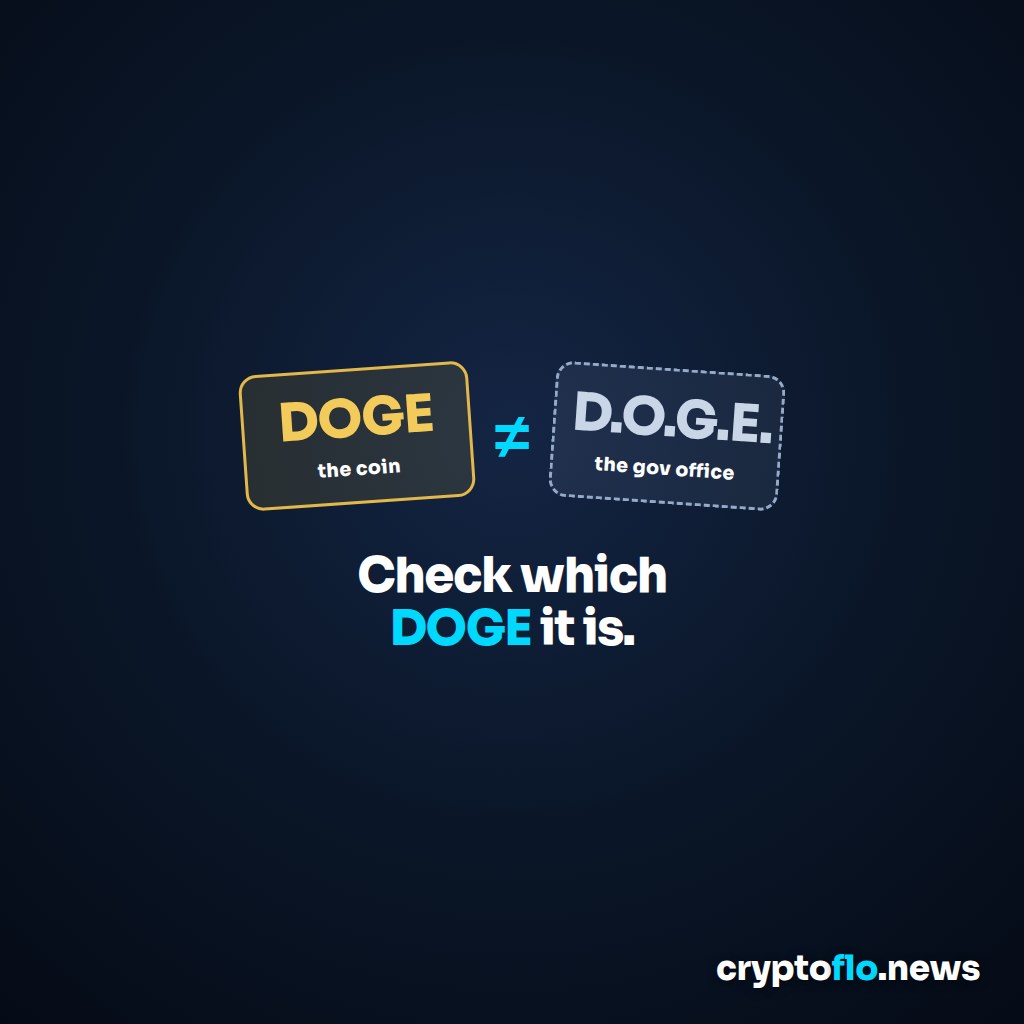
- The other "DOGE." The US Department of Government Efficiency, often called DOGE, has nothing to do with Dogecoin. Headlines about it are not Dogecoin news, though they sometimes get shared as if they were.
- "Musk is buying" or "X is adding DOGE payments" rumors. These come back again and again. Check the original source, such as the company's own announcement, before believing them. (Our guide to reading crypto project announcements covers how.)
- Scarcity claims. Dogecoin has no supply cap. Any story suggesting DOGE is running out misunderstands how it works.
- Whale panic. A large transfer often just reflects an exchange moving funds between its own wallets. Check the addresses on an explorer before assuming someone is selling.
- Targets with no reasoning. A price target is an analyst's view, not news. From someone who shows their data and reasoning, it's worth weighing. A big round number with no case behind it isn't analysis.
A Simple Dogecoin Source List
You don't need all of these. A lean list might be:
1. Dogecoin.com, for Foundation announcements
2. Dogecoin Core on GitHub, when a release or security fix is in the news
3. Blockchair, to check transactions, supply and whale claims
4. ETF issuers' pages, for fund holdings and demand
5. One newsroom, such as Decrypt, The Block or Cointelegraph, for daily news
6. One or two analysts you trust, for context and the bigger picture
Our 15-minute routine shows how to fit a list like this into your day, and our guide to choosing crypto news sources you can trust explains the thinking behind it.
Where Crypto Flo Fits
Dogecoin is one of the 15 coins Crypto Flo supports. Crypto Flo is a personalized AI crypto intelligence platform that turns the coins you follow and the sources you choose into a daily audio or text briefing. For each coin it maintains a vetted library of at least 10 YouTube channels and 10 news outlets, and you choose which of them brief you. The sources above are our editorial picks for this guide. Crypto Flo's own library is separate, and you choose from it inside the app. See how Crypto Flo works.
Frequently Asked Questions
Q: What is the best source for Dogecoin news?
A: There isn't one. A good mix is Dogecoin.com for Foundation announcements, Dogecoin Core on GitHub for software releases, Blockchair to check transactions and supply, ETF issuers' pages for fund holdings, one established newsroom such as Decrypt, The Block or Cointelegraph, and one or two analysts who show their reasoning.
Q: Does Dogecoin have a maximum supply?
A: No. Dogecoin has no supply cap. About 10,000 new DOGE are created with each block, roughly every minute, which adds about 5 billion DOGE a year. The yearly inflation rate falls slowly over time but never reaches zero.
Q: Is there a Dogecoin ETF?
A: Yes. Grayscale's GDOG became the first spot Dogecoin ETF in the US on November 24, 2025, and 21Shares launched TDOG on January 22, 2026. REX-Osprey's DOJE, launched in September 2025, gains exposure through derivatives. Bitwise announced in September 2026 that it would close its Dogecoin ETF, with a last trading day of October 14, 2026.
Q: Is the government DOGE related to Dogecoin?
A: No. The US Department of Government Efficiency, often called DOGE, is unrelated to the Dogecoin cryptocurrency. News about it isn't Dogecoin news.
Q: Is Elon Musk giving away Dogecoin?
A: No. Livestreams and posts promising to double your DOGE if you send some first are scams, often using deepfake videos of Elon Musk. Never send crypto to anyone promising to send more back.
Q: Who develops Dogecoin?
A: Dogecoin Core, the main software, is maintained by a small team of mostly volunteer developers on GitHub. The Dogecoin Foundation supports the project, and House of Doge is its commercial arm.
The Bottom Line
Dogecoin news is fast, social and easy to misread. Use Dogecoin.com and GitHub for official news, Blockchair and ETF issuers' pages to check the numbers, a good newsroom for daily coverage, and a couple of trusted analysts for context. Remember that DOGE has no supply cap, that the government's DOGE isn't Dogecoin, and that nobody is giving away free coins, and you'll be better informed than most of the timeline.
This content was created with AI assistance and may contain errors, always verify before acting. Not financial advice. Always do your own research before making any investment decisions.
Frequently Asked Questions
What is the best source for Dogecoin news?
There isn't one. A good mix is Dogecoin.com for Foundation announcements, Dogecoin Core on GitHub for software releases, Blockchair to check transactions and supply, ETF issuers' pages for fund holdings, one established newsroom such as Decrypt, The Block or Cointelegraph, and one or two analysts who show their reasoning.
Does Dogecoin have a maximum supply?
No. Dogecoin has no supply cap. About 10,000 new DOGE are created with each block, roughly every minute, which adds about 5 billion DOGE a year. The yearly inflation rate falls slowly over time but never reaches zero.
Is there a Dogecoin ETF?
Yes. Grayscale's GDOG became the first spot Dogecoin ETF in the US on November 24, 2025, and 21Shares launched TDOG on January 22, 2026. REX-Osprey's DOJE, launched in September 2025, gains exposure through derivatives. Bitwise announced in September 2026 that it would close its Dogecoin ETF, with a last trading day of October 14, 2026.
Is the government DOGE related to Dogecoin?
No. The US Department of Government Efficiency, often called DOGE, is unrelated to the Dogecoin cryptocurrency. News about it isn't Dogecoin news.
Is Elon Musk giving away Dogecoin?
No. Livestreams and posts promising to double your DOGE if you send some first are scams, often using deepfake videos of Elon Musk. Never send crypto to anyone promising to send more back.
Who develops Dogecoin?
Dogecoin Core, the main software, is maintained by a small team of mostly volunteer developers on GitHub. The Dogecoin Foundation supports the project, and House of Doge is its commercial arm.
Let AI summarize these channels for you daily
Pick your favorite crypto YouTube channels and news sites. Get a 5-minute AI brief every morning.
Choose Your Sources